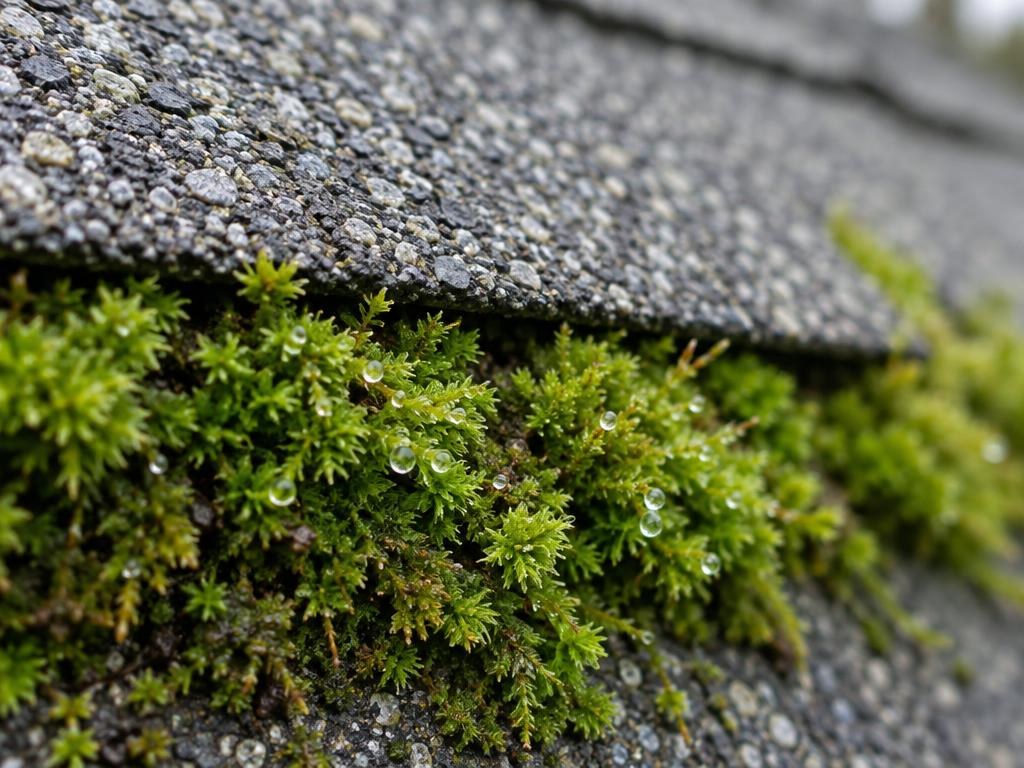
Why moss needs to come off
Moss thrives on damp, shaded roofs, which describes much of the Willamette Valley from October to May. Oregon State University Extension notes that moss clings to asphalt and metal roofs and can lift shingles, letting water reach the layers underneath. On wood shake it can degrade the roof directly.
How professionals do it
- Inspect. Roof age, material, moss coverage and what is shading the roof.
- Clear loose debris. OSU advises cleaning the roof before applying any moss treatment.
- Treat. A moss treatment is applied at low pressure so the growth dies and loosens.
- Remove the dead moss. Brushing or blowing it off is a necessary step, because treatment alone leaves the mat in place.
- Clean gutters and downspouts. Loosened moss and granules end up here.
Moss killers: what they do and don't do
OSU describes moss killers as short-acting. They wash off in the next rain and give little long-term control, and you still have to remove the dead material. Treatment works best when moss is actively growing, and you want a dry spell afterward. This is why prevention matters as much as removal.
Doing it yourself
It is not for everyone. If you do try, OSU's safety advice includes shoes with strong traction and a ladder on stable ground that extends at least three feet above the roofline. A wet, mossy roof is slippery. When in doubt, hire a professional or stay on the ground with a long-handled brush.
Questions to ask before you hire
- How will you remove the moss, and at what pressure?
- Is the work guaranteed in writing, and for how long?
- Are gutters and downspouts included?
- Can you show proof of insurance and your Oregon CCB license number?
More on this in our guide to how to hire a roof cleaner, and what it should cost.